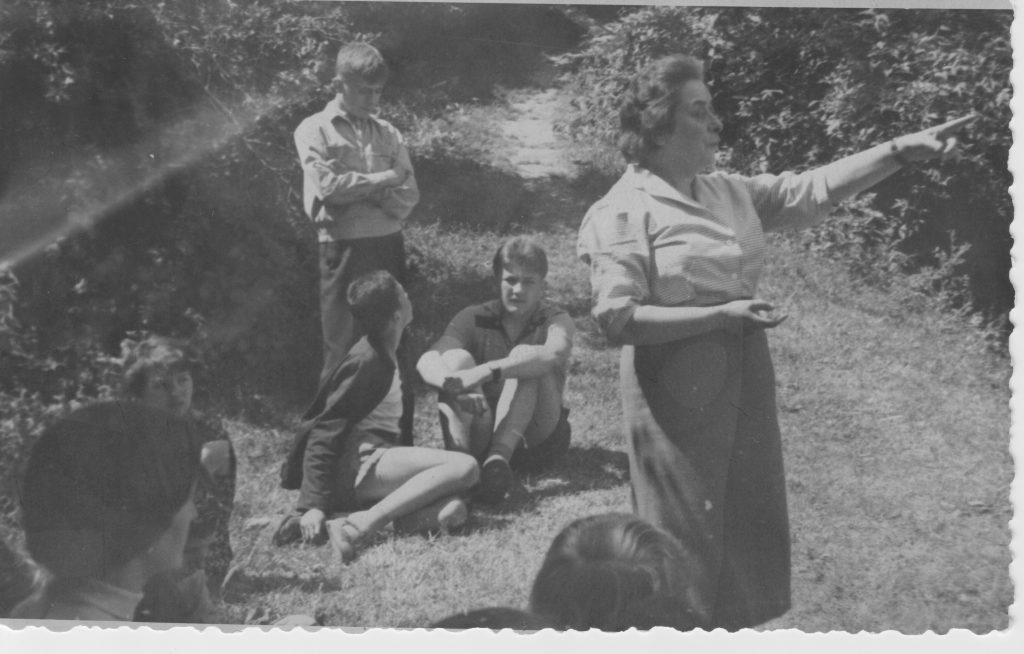
Mrs. Helena Libera, de domo Żmijewska, in high school taught us ancient history, Latin, logic, and, after the hours, French. She also lived a virtuous life, about which we have found out much later.
Latin
That was the reason I joined her class. It was on the advice of my father, who himself, before the war, received a classical education. Greek, Latin, and ancient history. And German, fluency in which saved his life during the German invasion. I remember my mother, who graduated only from elementary school, was deeply immersed in the culture, knowing many Latin proverbs. Her favorite was Mater semper certa est, stressing the virtues of motherhood.
French
The lessons were voluntary and conducted in the afternoon in the same classroom. Our motivation was not great, and for a few, the most common sentence soon became “Je ne suis pas préparé aujourd’hui” which meant that we didn’t do our homework. The good intentions of our teacher didn’t meet our enthusiasm, and the course folded.
Literature
Arma virumque cano Troiae qui primus ab oris
Italiam fato profugus, Laviniaque venit...
I was standing in front of my high school class reciting Vergil’s Aeneid in rhythmic dactylic hexameter. My teacher sat at her desk, visibly pleased with the performance. She was a short woman, well under 5 feet, with the serious demeanor and powerful voice necessary to control a twenty-something class of teenagers. Those were still times when we rose when she entered the room and sat down after she said so. When we became rowdy, her forceful command stopped all the conversations. And if it didn’t, the order ‘stand up’ got our attention. Then, one by one, after her permission, we were allowed to sit down. And the class resumed.
I relived the Aeneid watching a recently produced movie. An original “hero comes home” theme. The genre has been repeated ever since in the world’s literature.
History
Gallia est omnis divisa in partes tres, quarum unam incolunt Belgae, aliam Aquitani, tertiam qui ipsorum lingua Celtae, nostra Galli appellantur...
The book, De bello Gallico, written by Caesar, was our introduction to ancient history and a lesson in Latin.
Logic
If A is B, and B is C, therefore A is C. QED, quod erat demonstrandum. “What was to be demonstrated.” Or CBDO in Polish.
She was able to connect for us Latin to logic and later to mathematics. It still rings true to me.
Music
I still remember what she wrote in my little blue booklet, which we used to give to each other to write memorable, personalized sentence:
Tam siadaj, gdzie grają,
Źli ludzie muzyki nie znają.
Which loosely translates to “Be around people who like music. You won’t find bad people there.”
And yes, music is a part of classical education.
Later on I found out she paraphrased famous Goethe’s words. It was written well before the ascent of Hitler, who portrayed himself as a big music lover. It was also significant since her husband was Jewish, and the only time I saw her scared was during the 1961 anti-Jewish events in Poland.
I remember her bringing a record player to the class and exposing us to some classical piece. Being a music student at that time, I was asked to explain the structure of a composition, which made me proud.
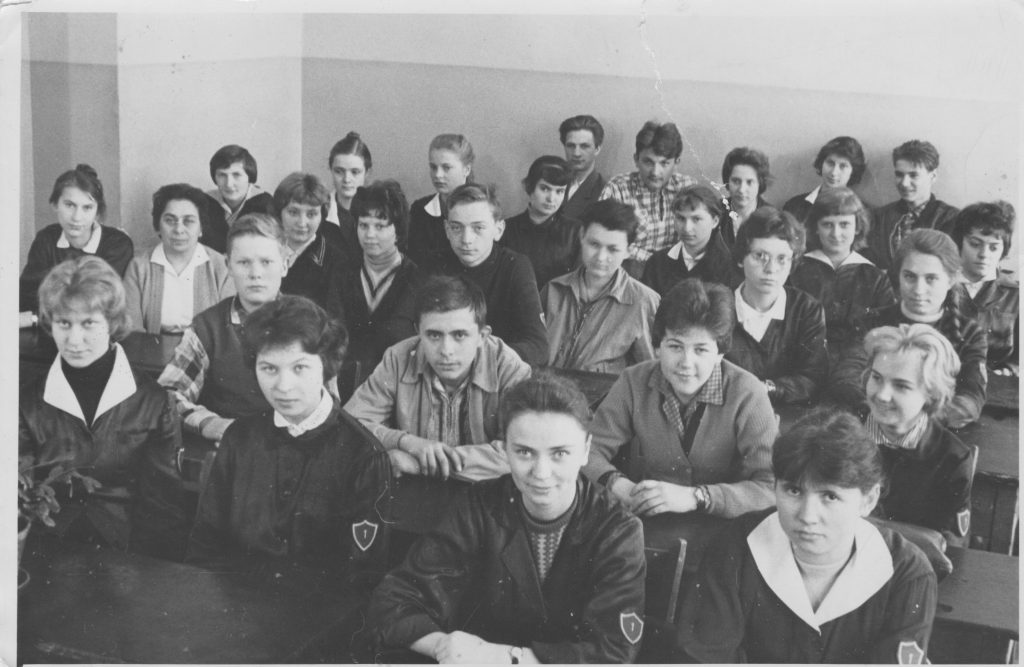
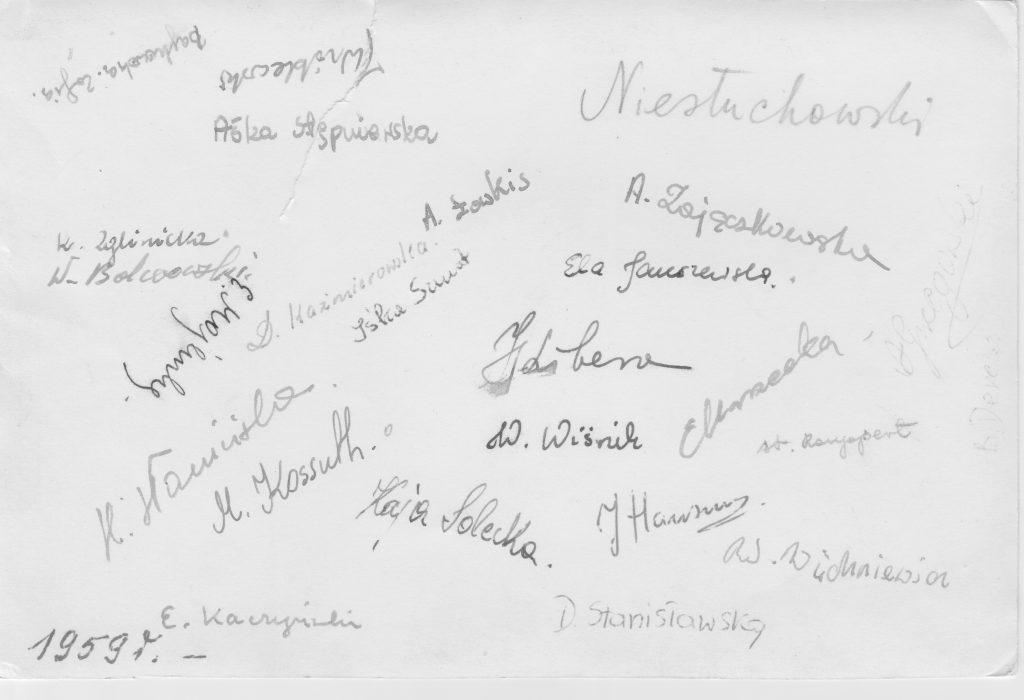
The picture was taken in 1959, and our teacher is easily recognizable there. I still keep in touch with a few of my former classmates.
Ethics, citizenship, and virtue
Civis Romanus sum
It was a statement of pride of being a citizen of this magnificent country. When travelling across the Roman Empire, safety was said to be guaranteed to anyone who declared, “Civis Romanus sum”.
In her case, it was more Civis Polonus sum.
The wife of a university professor and an expert of Polish literature from the period of the Enlightenment, and the mother of the future Polish writer, translator, literary critic, and theater director, she was an epitome of a well-rounded individual, firmly grounded in the rich Western culture.
During the German occupation, she took part in underground secret classes (tajne komplety), demonstrating unbreakable Polish tradition to provide education to our youth. This was explicitly forbidden by the Germans and punishable by imprisonment, torture, and death. The Germans knew how to break the spirit of a nation. Her husband participated in the Warsaw uprising.
Arts
I remember well when she took us to a prestigious Warsaw museum “Zachęta” and explained why the inscription on the architrave of the building is engraved with the Latin word ARTIBUS.
She lived to be 99. Talking to my classmates, she was universally remembered as our best teacher. And yes, after my mother, Mrs. Libera was my first mentor.
On their tombstone there is an inscription MACTE ANIMO. WELL DONE.