
Twin brothers
To me, Jan Mikulicz-Radecki and Ludwik Rydygier were like twins. Both born in 1850, both from solid Polish stock, both traveled the murky waters of 19th-century surgery. The times were rough, and only the strong survived. They both not only kept pace with the dizzying progress but also excelled and contributed to impressive levels of their specialty in the 20th century.
Czerniowce
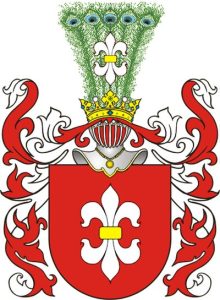
Jan Mikulicz-Radecki was born in Czerniowce, at that time under Austrian occupation. His father was granted a coat of arms by King Jan III Sobieski after the successful siege of Vienna in 1683.
Vienna, under the wing of Billroth
After starting his school in Prague, the family moved to Vienna to obtain a better education there. Mikulicz took piano lessons there. Young Jan first wanted to become a priest. His father didn’t like it. Then he wanted to be a doctor. Father again opposed. And since the young man persisted, his father withdrew all financial support. Mikulicz survived initially by giving private tuition and piano lessons.Later, after his talents were recognized, Jan Mikulicz-Radecki was awarded a scholarship. After graduation from the medical school in Vienna, he became a faculty member in Theodore Billroth’s clinic. While in there, he was immersed in the rich scientific and cultural life of the Austrian capital. Mikulicz even played four-hands piano with his mentor, who was a well-known musician and composer.
There, Mikulicz invented the gastroscope.

Mikulicz, like his mentor Billroth and his peer Rydygier, was an excellent, anatomically precise surgeon; all three operated with minimal blood loss.
Under Billroth’s wing, he was able to tour the best hospitals in Europe and the United States.
Then, after getting married, he had to leave his position at the hospital since the rules at the time stated that a married assistant could not occupy a permanent post at the university hospital. So Billroth helped him to get a position at the Jagiellonian University in Kraków.
Kraków
Under his direction, the hospital became one of the best in the Austrian Empire. But he still wasn’t able to build his own place, the one with the most modern design in the construction of the operating rooms. With Napoleon Cybulski (1854-1919), he published a work on the physiology of the esophagus. During a Congress of German Surgeons in Berlin, he delivered a report on 103 stomach resections in the course of cancer and peptic ulcer disease, which he performed by himself in Cracow.
Królewiec
So he moved to Królewiec, at this time under Prussian rule. There he expanded the already existing hospital, made progress in the intra-abdominal operations, ENT procedures, ortho surgery, and developed the endoscopy manual. Next, he moved to Wrocław, then under German rule. There the surgeon reached the pinnacle of his career.
Wrocław, the last stop
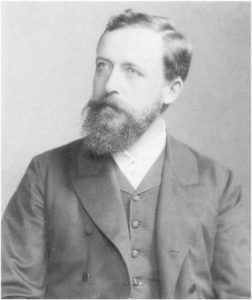
Here he was able to build his dream operating theater. He moved all his cases there, abandoning the showmanship of submitting his patients to the hazardous environment of the crowded surgical amphitheaters. He used surgical masks, first sterile cotton gloves, and then improved to rubber. Introduced steam autoclaves. His surgical infection rate came down to an astounding 1%. He had so many ‘firsts,’ too many to mention. He was active in many surgical subspecialties, well beyond his field of general surgery. Not only that, but he was treating difficult-to-heal wounds and ulcers of the skin by using preparations containing iodine and lapis ointment with balsam of Peru. This ointment—also called Mikulicz ointment—is used to this day in surgical and dermatologic practice.
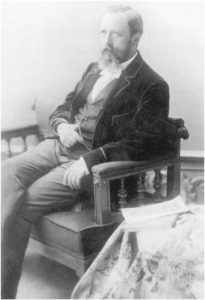
A Renaissance Man
He spoke Polish, German, Russian, and English. Speaking Yiddish gained him many Jewish patients, who revered him as next to God.
At the end of 1904, Mikulicz felt by palpation a tumor in his abdomen. Soon after this, at the end of December, he consulted Bernhard Naunyn and underwent an exploratory laparotomy. Mikulicz’s friend, Professor Eiselsberg from Vienna, performed the surgery in Mikulicz’s private surgical clinic in Breslau on January 7, 1905, using ether anesthesia. The procedure revealed the existence of a large, inoperable stomach tumor with metastases to the liver.
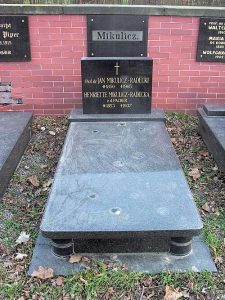
Professor Mikulicz died on 14 June 1905 at the age of 55. On the occasion of his funeral, thousands of people from Wroclaw lined the street to bid him farewell. At Mikulicz’s request, he was buried in the cemetery in Świebodzice.
Was Jan Mikulicz-Radecki Polish?
So I asked Grok AI the question.
Was Jan Mikulicz-Radecki a Polish surgeon?