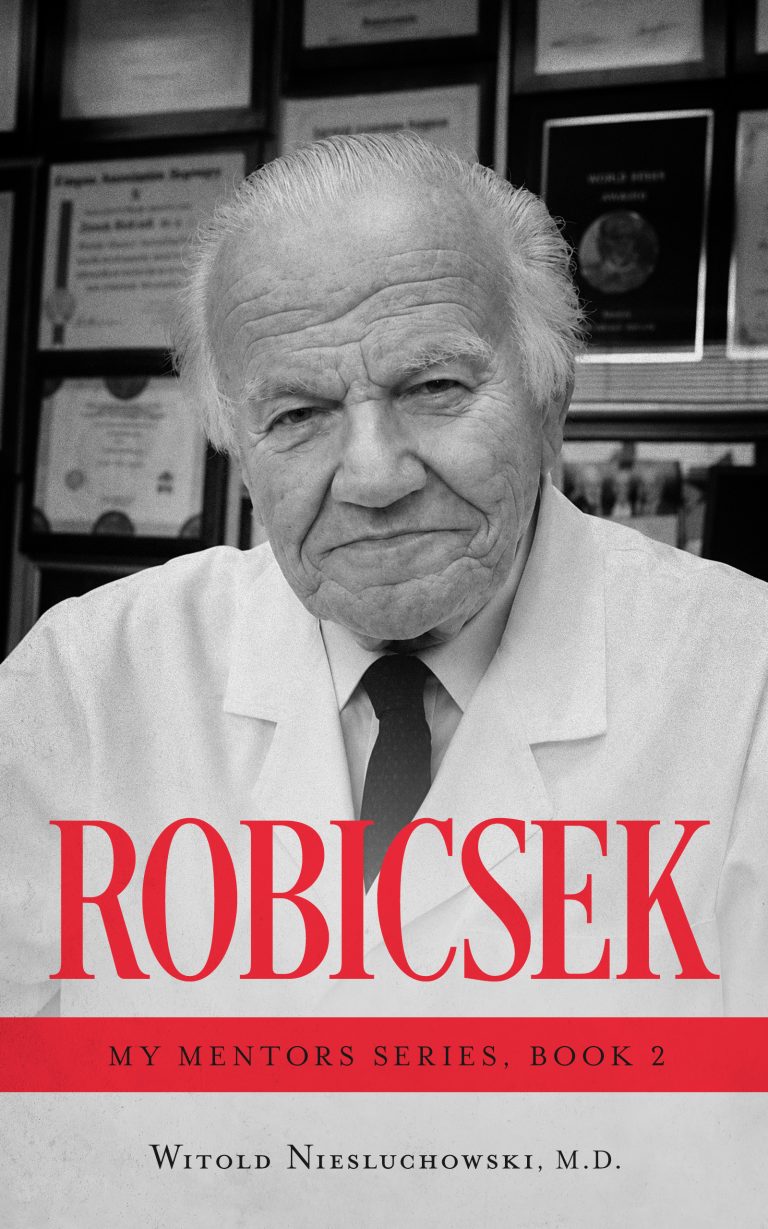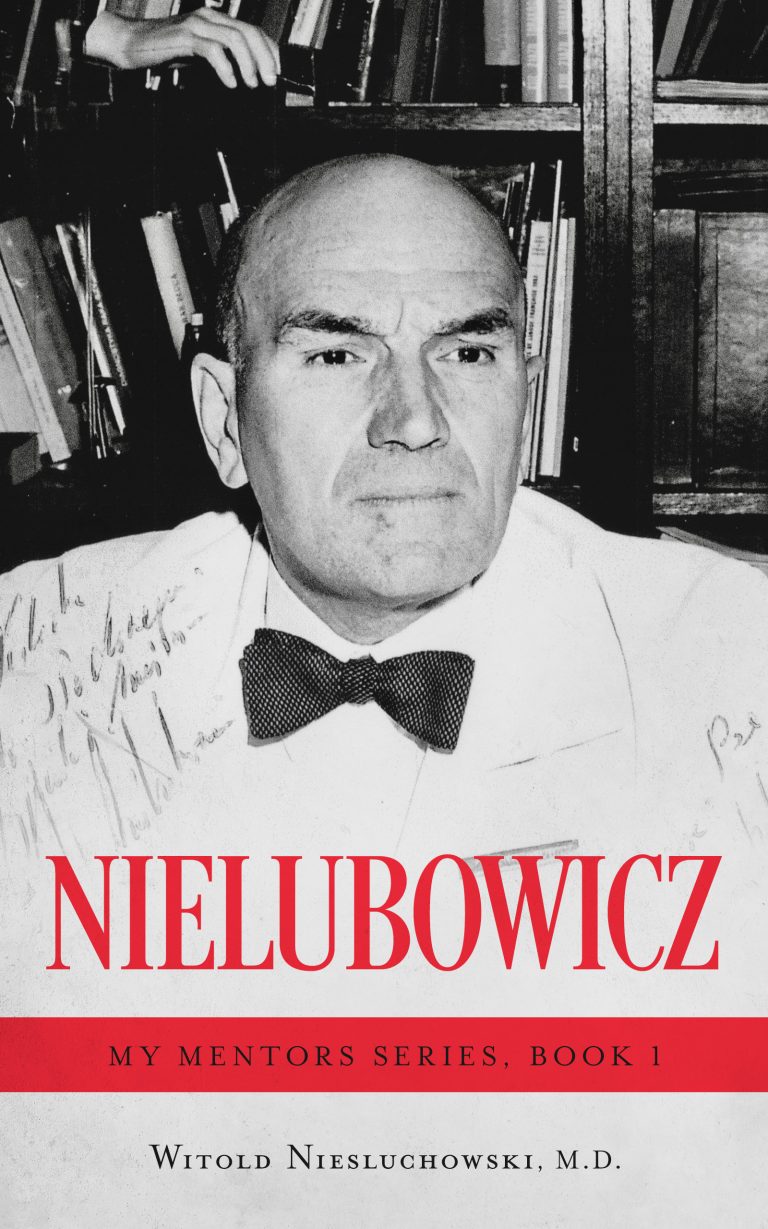
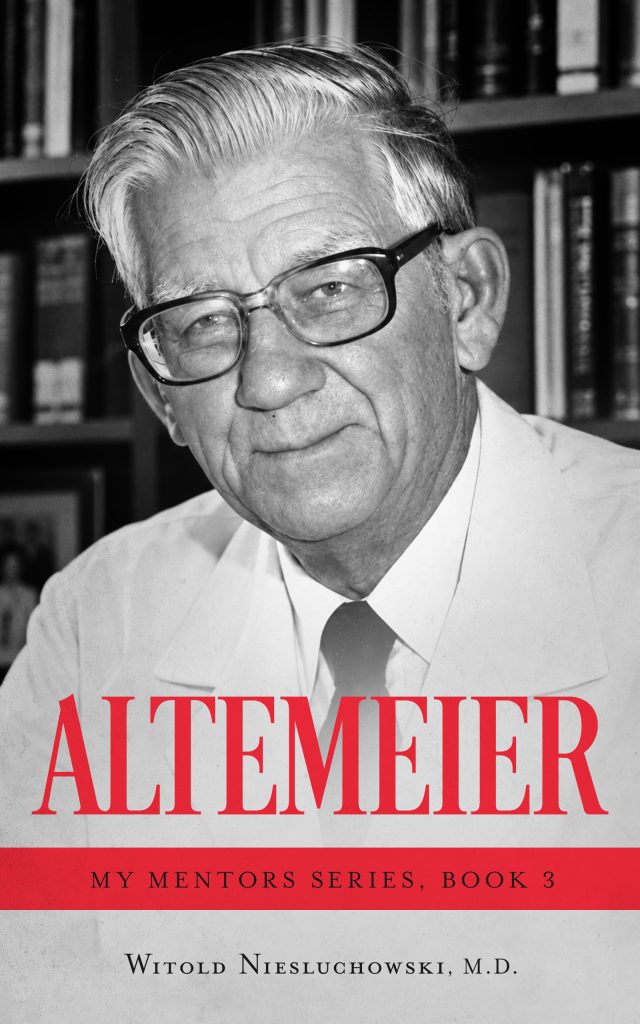
His name came up at a crucial moment of my stay in the United States. By the end of my first year in Charlotte, I decided to look for a way to continue my education in this country. When I mentioned it, Dr. Joe Cook, one of my attending surgeons, offered to refer me to his alma mater. He had just finished the cardiac program at the University of Cincinnati and was happy to talk to its director, Dr. William Altemeier.
I was invited for an interview, and soon I was sitting in Altemeier’s office.
Meeting my third mentor
Altemeier struck me as a calm, unassuming man. Short, with full, neatly combed silver hair. Very polite, with a low-key voice that didn’t fit the image of an omnipotent chief of the department. At the end of the interview, he said, “We are working very hard here.”
No kidding. On call every other night, throughout seven years of cardiac residency.
And I got accepted.
A big break
Coming to Cincinnati was a turning point in my life, though not because I stepped into the lineage of the “blue bloods” of American surgery. Altemeier was trained by Mont Reid, who in turn was the last resident of Halsted. That alone would have been something.
But in Cincinnati, I met Bonnie. Forty-eight years and still counting.
Rounds started well before sunrise, even in summer.
The system of prepping, draping, and instruments was well defined and rigorously followed. Simple instruments. Plain white towels attached to the skin with silk sutures. Specific two-handed surgical knots. No other way tolerated. Ten minutes of scrubbing at the sink before every operation.
We ate and slept not when we were hungry or tired, but when there was time.
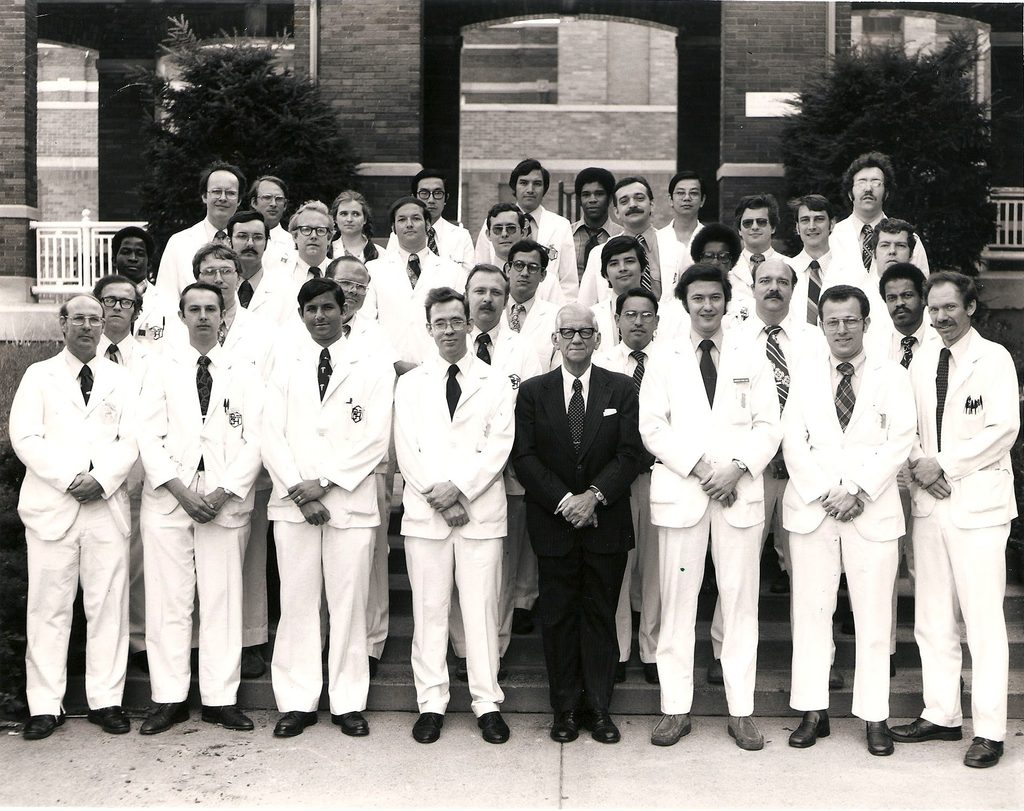
My wedding
Bonnie agreed to marry me, and I was in seventh heaven. On our wedding day, I was on ER rotation. The shifts were 12 hours long: three working days, a 24-hour break, and three nights to follow. A murderous schedule. For the wedding, I got three days off. The first was for the rehearsal, the second for the ceremony, and the third for the honeymoon. Then back to the grind.
But no regrets. If you love what you are doing, you can tolerate the workload.
Who was Altemeier?
I learned about his life later. A baseball player. A Korean War veteran. Not the typical résumé of a surgeon trained in the highly organized, disciplined system designed by Halsted.
His claim to fame, however, was his work on surgical infections and microbiology. Thinking back, I probably saw more pictures of him behind the microscope in the lab than at the operating table.
A different kind of wedding story
His wife, Edna, died of cancer on March 2, 1975. As she was losing her battle, she suggested that he marry her best friend, Dorothea Wertz. Dorothea had been a friend of the family for years, and for four decades she was also Altemeier’s secretary. He did marry her, and she remained a welcome and loved member of the family until her death at the age of 90.
The decent, quiet, always smiling man
By the time I got to know him, Altemeier was near the end of his career. He didn’t operate much, napped during medical conferences, and retired the following year. He died five years later.
Decent, quiet, always smiling. Not a bad way to be remembered.
ALTEMEIER, the third book in my series about my mentors, is coming soon. I am writing it now.