By all the measures, he was a giant.
Charismatic, spoke several languages, and was brilliant in conversation. His bursts of laughter kept you unbalanced.
What a personality!
Prof. Dr. Jan Nielubowicz early learned that the art and science of surgery need improvement, and he saw the direction in which to go. The decisive moment in his professional life was in 1958, when he received a Rockefeller Foundation scholarship and spent a year in Massachusetts General Hospital. There, he met some of the luminaries of modern surgery and anesthesiology, and the world of Polish medical care was never the same.
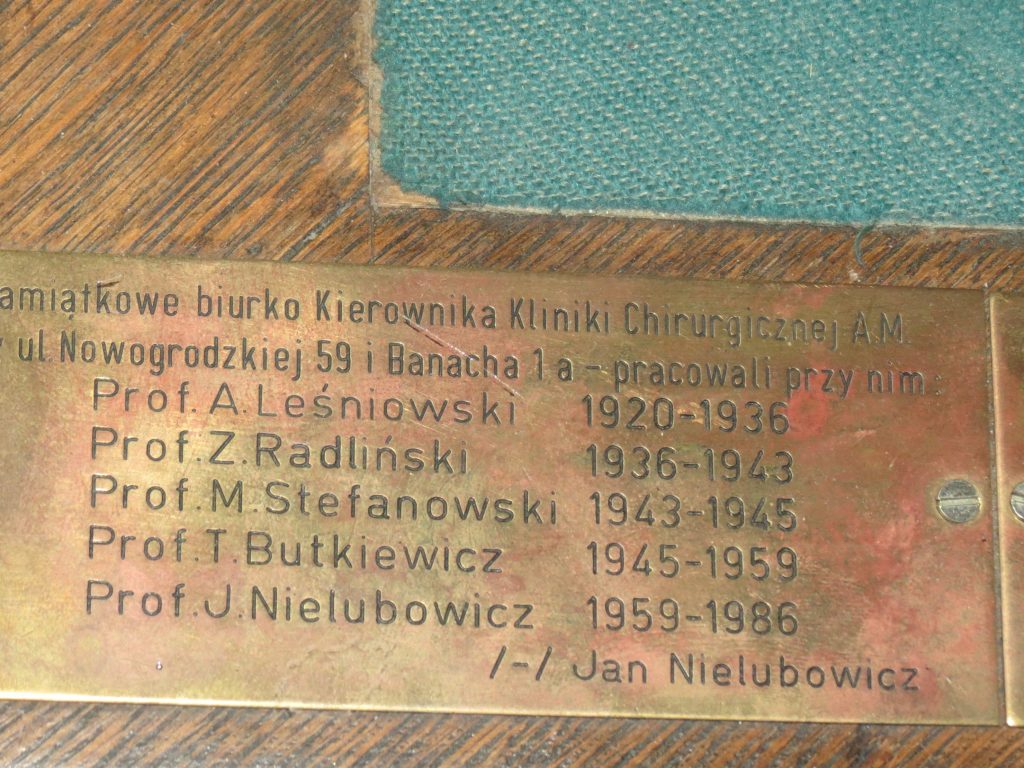
He became the head of the first surgical department of Warsaw Medical School at the age of 44 and stayed there until the mandatory retirement age of 70. 26 years—not too shabby.
What’s changed?
Ever since Nielubowicz came back from Boston, he has revamped the entire department. Five days workweek, ties on while not in scrubs, and lots of English medical terminology. We weren’t na dyżurze—we were on call. These were the superficial changes. The most consequential was a fundamental shift in seeing the patient. We weren’t thinking in terms of a single case. We were supposed to know how the particular case was viewed in the spectrum of world literature and statistically apply it to a given patient. He wasn’t thinking of his experience, whether he had a similar case, or what he was treated in in the past. He knew the most recent contemporary knowledge and treated it accordingly. An entirely different paradigm.
Department of Experimental Surgery
Nielubowicz didn’t create the department. My uncle worked there during the German occupation. But under his tenure, the scope and influence of a ‘dog lab’ increased enormously. It became an integral part of the department of surgery and a fundamental element in treating the patients.
Contacts with the Western surgical centers, ‘travel bureau.’
Besides Mass General in Boston, he trained at the Leriche Clinic in Strassburg, the Institute of Heart Surgery and Vessels in Moscow, and Hammersmith Hospital in London, knowing all the local languages. There he made connections for life. In Edmonton, Alberta, there was a surgical center, directed by Dr. Kenneth Bowes, where for many years there was a place for one of his assistants to spend a year and learn modern surgery. Assistants’ travel had become so common that our department was nicknamed a ‘travel bureau.’ And there were not enough parking spots for the cars each doctor brought from abroad. Kenneth L. Bowes incidentally died just a few months ago.
Journal club
I don’t know if there were medical literature meetings before Nielubowicz’s tenure. I do know that we were active; I was working with him. Our access to the world’s periodicals, besides the yellow ‘Annals of Surgery,’ was limited, so we were requesting the reprints from the authors of the publications. These were often granted, and we were able to discuss the newest medical literature during the journal club sessions.
Introduction of modern anesthesia
Many of our department anesthesiologists spend a customary year in Mass General under the tutelage of Prof. Henry Beecher, a well-known medical ethicist and informed consent propagator. The concept of the intensive care unit was introduced to our hospital, and, what was interesting, the first 24 hours of postoperative patient care were provided by the department of anesthesia.
What do you find under a fig leaf
The answer was ‘a fig.’ The simplest answer was generally the best. Later on I found out about ‘Ockham’s razor.’
Love of the Polish language
Despite the deluge of English terminology in medicine, he cultivated Polish words, sometimes to the point of inconvenience. And I respected him for that. During our meeting in Chicago, he praised me for my adherence to proper Polish. It meant a lot.
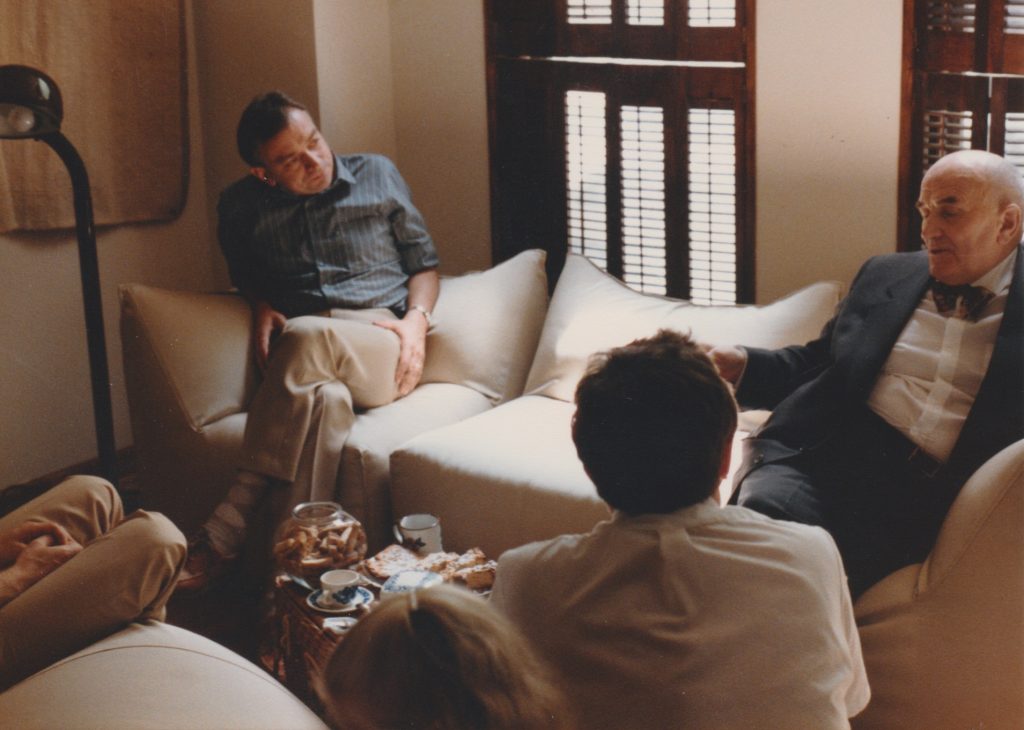
My recollection
He wasn’t a flawless person. By any means. But positives outweighed the flaws.
De mortuis aut bene aut nihil.
We don’t speak poorly about people who are not around us any longer.
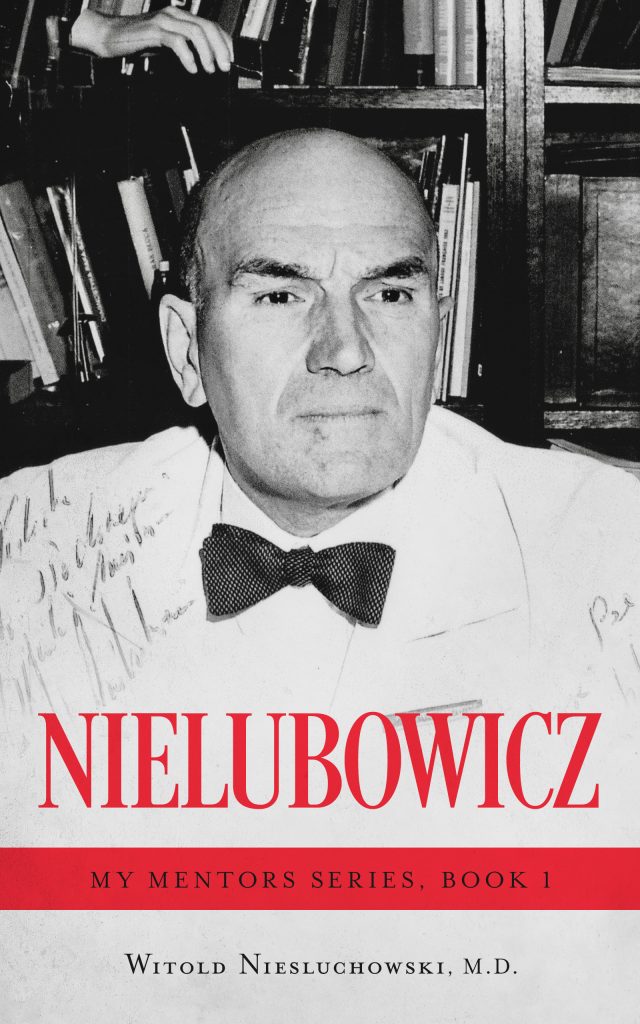
And here is the link to NIELUBOWICZ, my first book in a series about my mentors. One of the chapters was written by Dr. Zbigniew Sawicki, PhD, a student of his and a friend of mine. He still resides in Edmonton, in Alberta.